Changelog

New updates and improvements to Outline.
Follow us on twitter to find out when features are released.

Request access to documents

Members can now request access to documents they don’t yet have permission to view. When someone follows a link they can’t open, they’ll see a simple “request access” option that notifies the right people to approve.

This helps reduce “who owns this doc?” back‑and‑forth and keeps your workspace more discoverable without sacrificing access controls.

Public document subscriptions

Readers can now subscribe to publicly shared documents by email. When a subscribed document changes, we’ll send a notification that includes a summary of what’s new so followers can stay up‑to‑date without constantly checking back.

Public shares also gained quality‑of‑life improvements like better search highlights, the ability to customize the logo and title, and a command menu on shared pages, making public docs feel more like a lightweight knowledge portal.

MCP Improvements

We’ve significantly expanded Outline’s built‑in MCP (Model Context Protocol) support. AI assistants can now work with richer tools, including patching documents, moving and deleting documents and collections, working with attachments, and creating and resolving inline comments.

Responses from MCP now include more context, such as document breadcrumbs, summaries, and suggested titles, so AI integrations can feel more aware of your workspace structure.

GitLab integration

GitLab integrations

We have rolled out a new GitLab integration that allows embedding rich issue and merge request information directly into an Outline document. The integration works with both GitLab.com and self-hosted GitLab instances.

These new mentions will, of course, stay automatically up-to-date. To get started, connect your GitLab installation in Settings -> Integrations and then paste an issue or merge request URL from GitLab into the editor and selection "mention".

MCP

MCP (Model Context Protocol) is an open standard that lets AI assistants like Claude, Cursor, ChatGPT, and others directly search, read, create, and edit documents in your Outline workspace. Once connected, your AI tools become an extension of your knowledgebase — able to find information, draft new docs, and update existing ones on your behalf.

Using the MCP you can:

  • Search for information across your entire workspace
  • Use your AI assistant to help you write and edit content in Outline
  • Find, create, and resolve comments

Each Outline workspace now comes with an MCP server built-in, so you can connect your AI assistants in just a minute of setup. Check out the docs to get started.

Toggle blocks

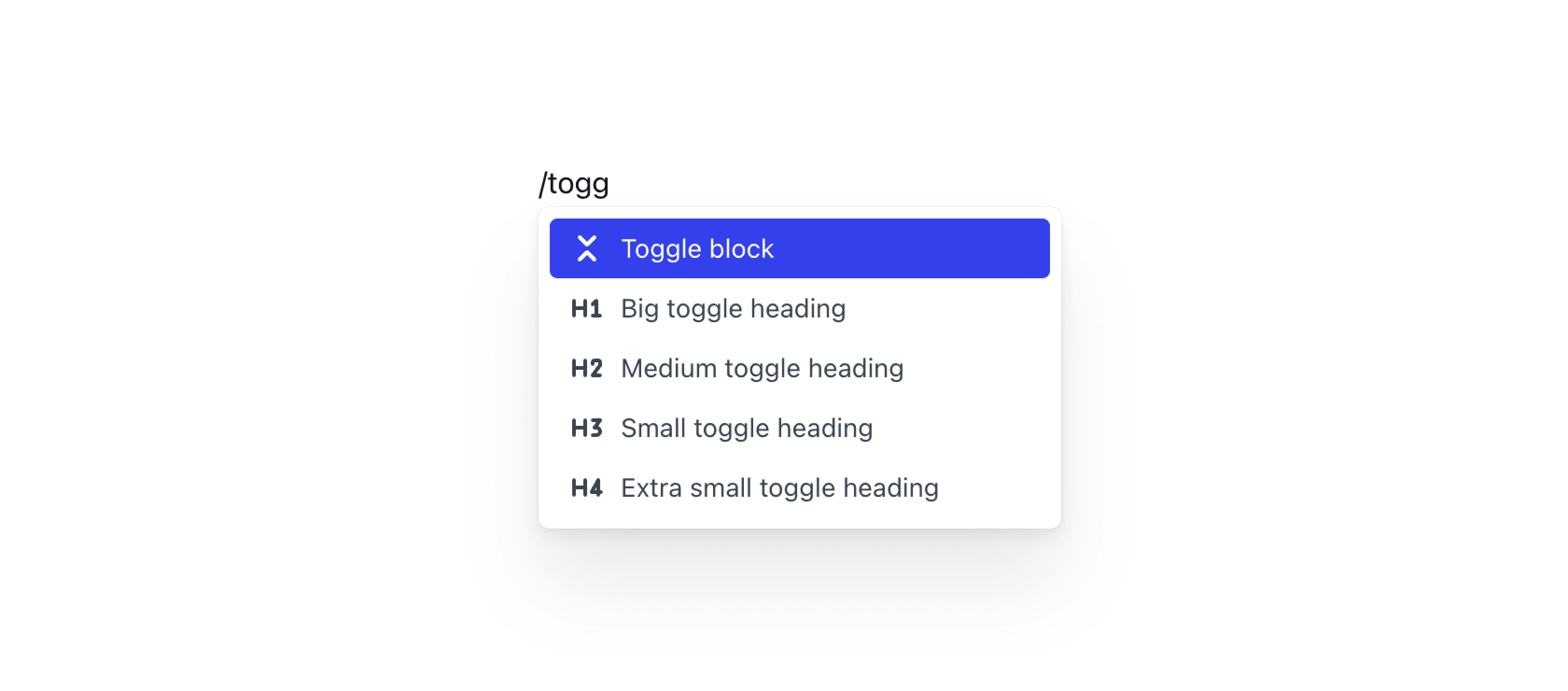
Toggle blocks are a new block type that allows you to hide and show content with a click. This is useful for creating collapsible sections in your documents, such as FAQs, step-by-step instructions, or any content that you want to keep hidden until the reader chooses to reveal it.

To create a toggle block, simply type /toggle and select the "Toggle" block from the menu. You can then add a title for the toggle and any content you want to include inside it. When the document is published, readers will see the toggle title and can click on it to expand or collapse the content.

Other improvements

  • Search results are now highlighted in the document when navigating from search
  • We added a new Figma integration which allows unfurling information about Figma links in documents

Table improvements

Table

Part 3 in our recurring series of improvements to tables in Outline. This release includes the following updates:

  • Table columns and rows can now be reordered by dragging the column or row header to a new position
  • Table cells can now have a custom colored background, use the new "Cell background" option in the toolbar to choose a color
  • Sorting of table data is more natural for currencies, dates, and numbers
  • Lists inside tables no longer break Markdown output
  • Tables with merged cells now behave correctly when sorting

Other improvements

  • Added the ability to choose custom color highlights for text
  • Clicking on a group in the share dialog now shows it's members
  • Added a hide/show completed items control for checkbox lists
  • Added Alt-click to recursively expand or collapse sidebar documents and collections
  • Added a preference for desktop notification badge with off, count, and indicator options

Passkeys & Custom emoji

Passkey support has been added as an optional login method. You can now sign in with biometric authentication (TouchId, Windows Hello) or security keys instead of a password. Existing workspaces will need to enable this on the authentication providers screen.

Also in this release – custom emoji. Upload your own custom icons and emoji in the admin settings and use them in your documents, comments, and reactions. Custom emoji can also be embedded in documents as small icons.

Draw.io integration

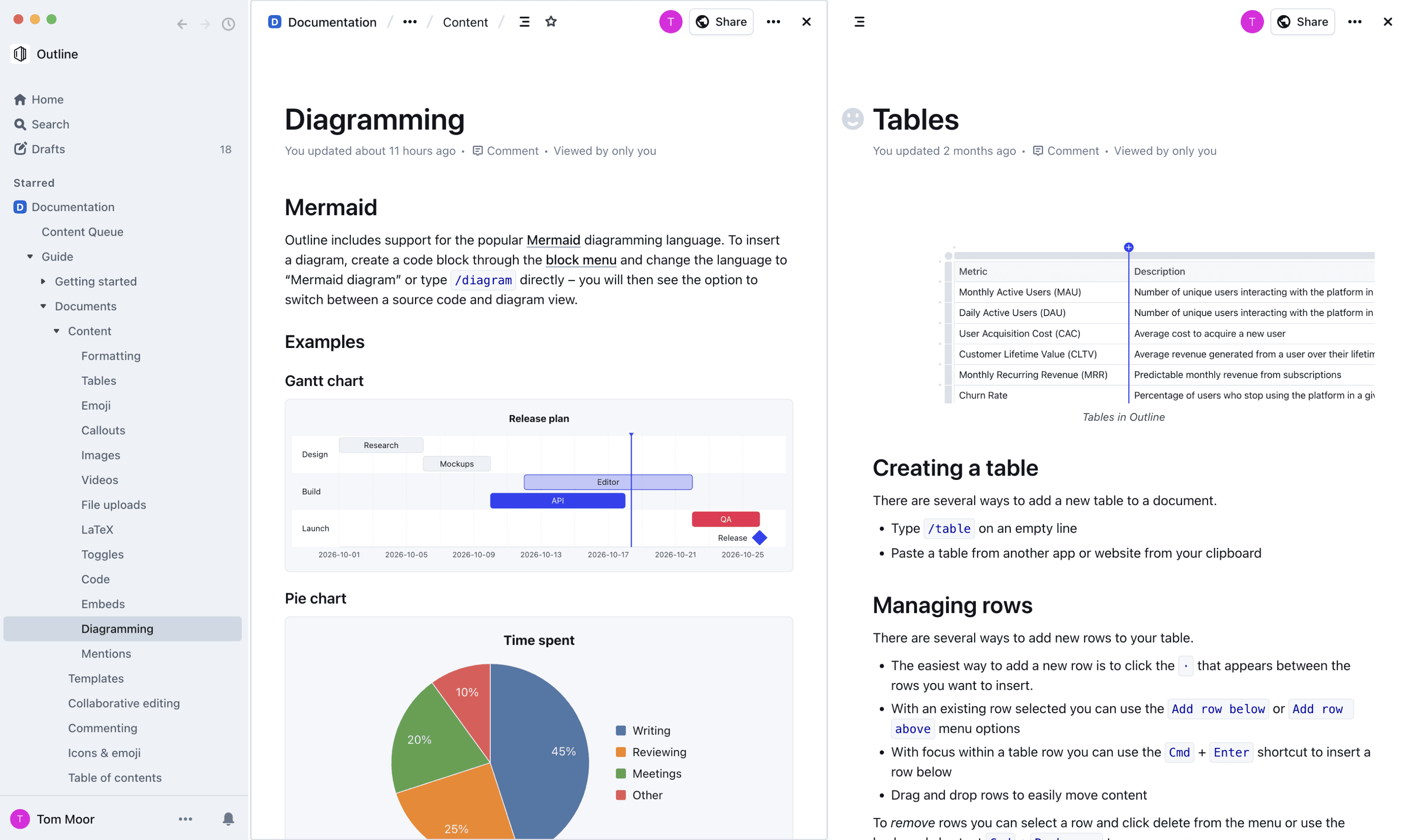
Draw.io (Diagrams.net) diagrams are now fully supported, insert new diagrams through the block menu or by uploading an existing SVG or PNG that was created in Draw.io.

The original diagram data will be preserved and can be edited by clicking the "Edit" button that appears in the image toolbar. This will open the diagram in Diagrams.net where you can make changes and save, the updated diagram will then be reflected in your document.

PDF embeds

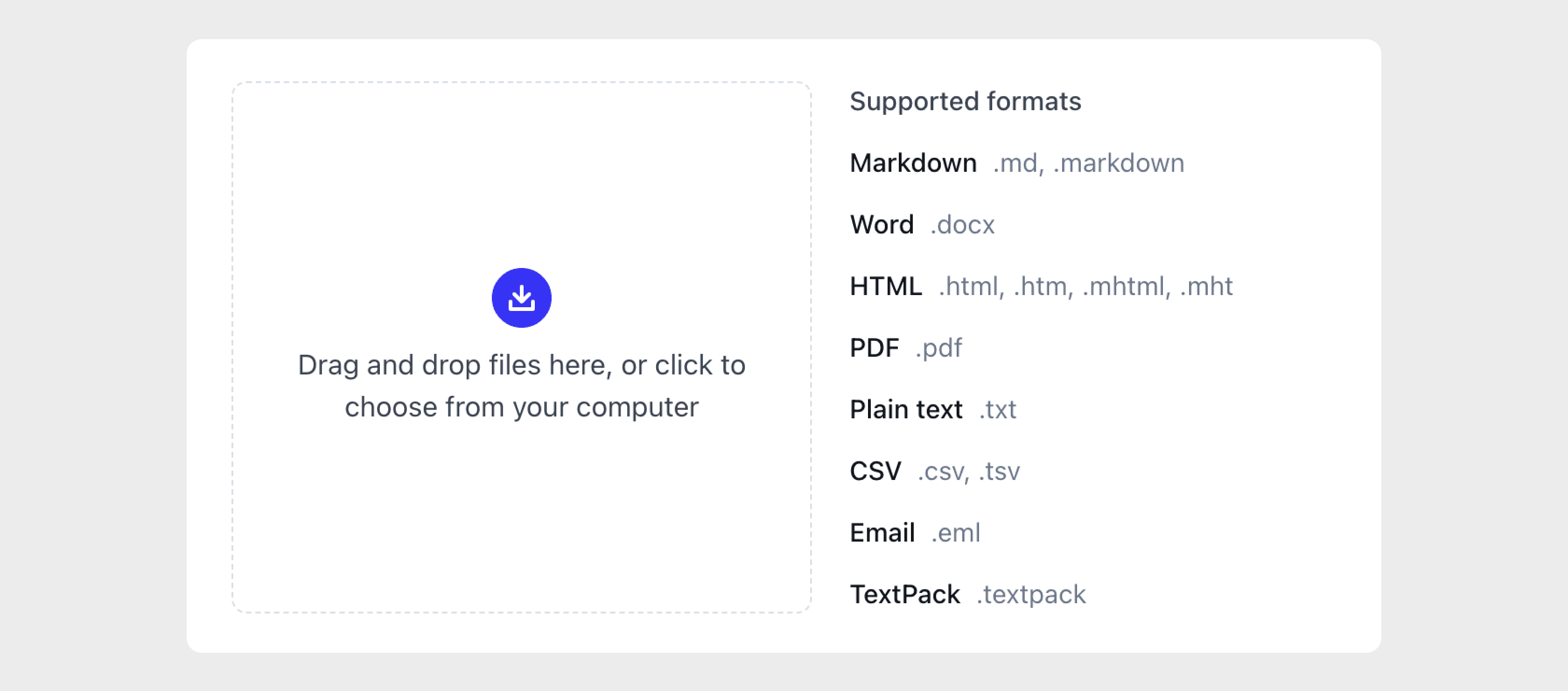
You can now embed PDF documents directly into your Outline document. This feature allows you to display PDF content seamlessly within your posts rather than uploading them as attachments.

To embed a PDF, search for "PDF" in the slash command menu (/pdf) and select the "Embed PDF" option.

Other improvements

  • Table controls are no longer broken when columns and rows are merged
  • Fixed an issue where copying and pasting from Google Docs would fail due to embedded images not uploading correctly
  • Edit permission on a single document now allows moving sub-documents
  • Lots of performance improvements to database queries
  • Fixed invisible buttons in emails viewed in dark mode

Popular documents

Outline now tracks document popularity based on views and interactions. This allows you to easily identify which documents are most relevant and frequently accessed by your team, these are surfaced in the new "Popular" tab and are given more prominance in search results.

Other improvements

  • The sidebar was considerably cleaned up to improve the clarity of nesting
  • The icon color picker now has a full spectrum selector
  • We overhauled syntax highlighting for code blocks
  • Double clicking on image and video resize handles now fills the media to document width
  • Line height now auto adjusts for scripts with many ascenders and descenders such as Thai

Group mentions

Group mentions

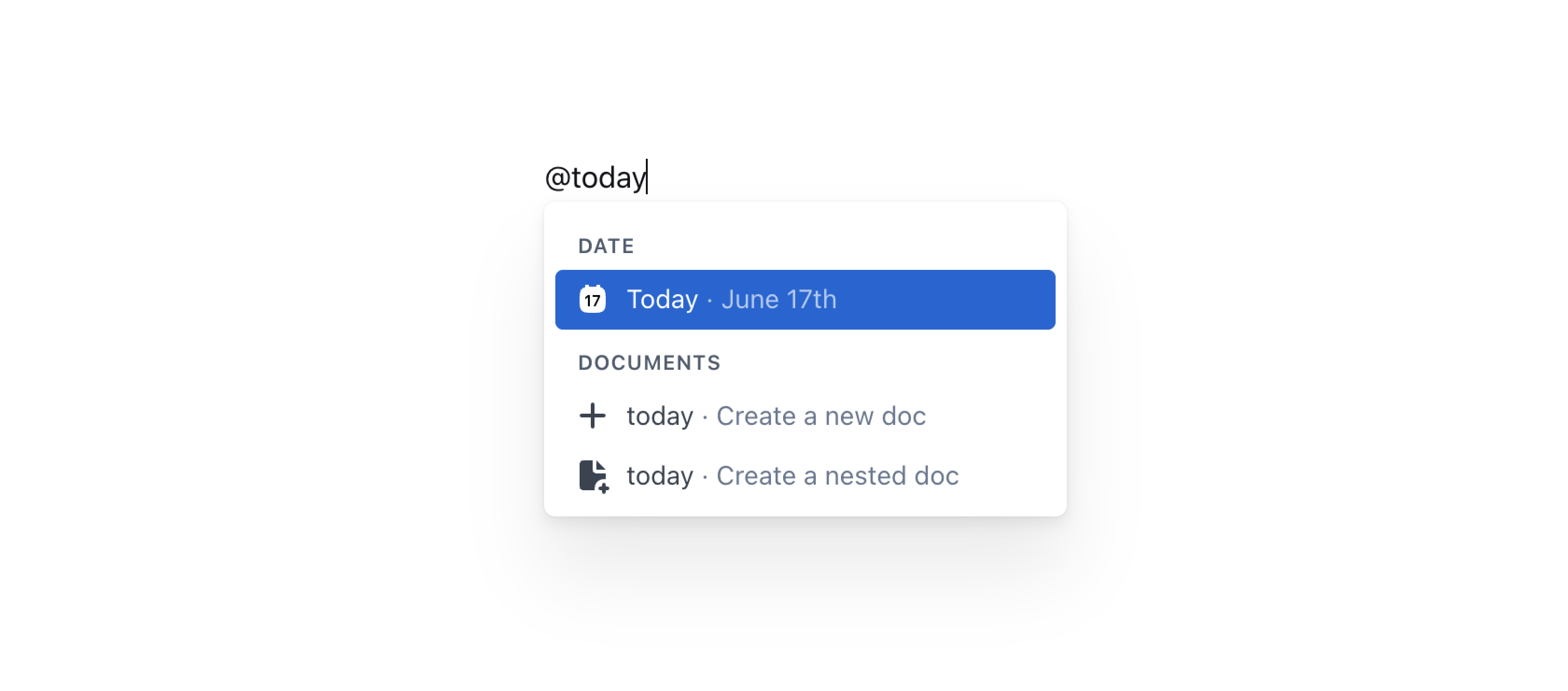
You can now mention groups in documents and comments, making it easier to notify entire teams or departments at once. To mention a group, simply type "@" followed by the group name, just like you would with individual users.

When a group is mentioned, all members of that group will receive a notification, so use sparingly! Of course, this feature can also be disabled on a per-group basis.

Other improvements

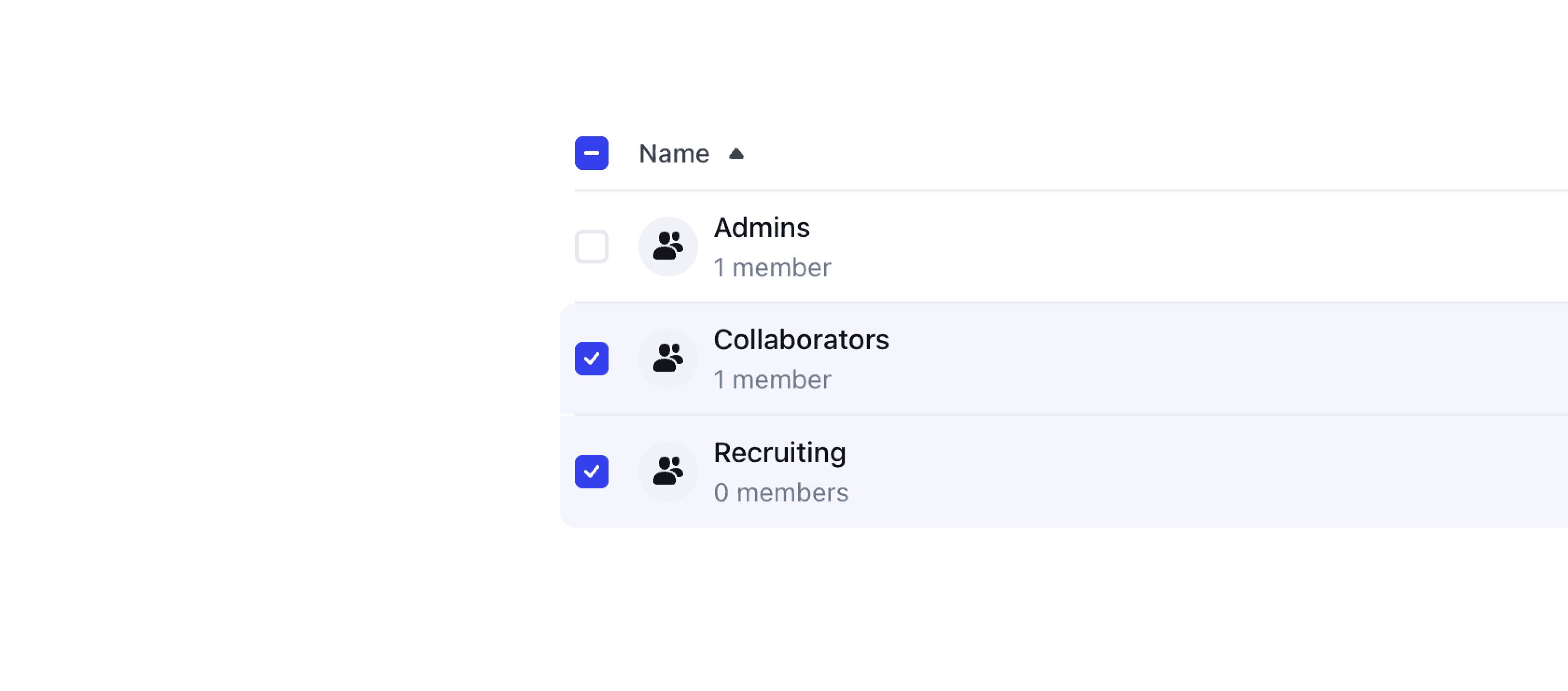
  • Groups can now have a description
  • You can now comment directly on images within documents.
  • Documents and collections in the sidebar now have context menus
  • Typed urls are now automatically converted into clickable links

Link mentions

Link mention formatting

We added an additional display option for links in Outline. When a link is pasted into a document or collection, it can now be displayed as a "link mention" which shows the title and icon of the linked page.

Simply paste a link to try it out.

New lightbox

Link mention formatting

We've completely rebuilt the lightbox that appears when you click into an image. It now supports navigating between all the images and diagrams in a document, as well as zooming in and out, panning large images, and full keyboard and touch navigation.

Other improvements

  • Typed URLs will now automatically convert to links when you press space or enter
  • It is now possible to format text across cells in a table
  • You can now right click on documents and collections to access the context menu

Public collection sharing

Collection sharing

This week brings some great improvements to public sharing. You can now share an entire collection to the public internet – this much-requested feature is great for sharing structured help docs or several related documents with a single link, and works exactly the same as sharing a single document.

As an additional security measure the Share button will also display a globe icon if a collection is shared publicly.